Starting out in Canada
How to start a flower business in Canada: registration, GST/HST, PST and your first customers
Short answer
To start a flower business in Canada, most people begin as a sole proprietor, with no corporation needed. Register your business name with your province if it isn’t your own name, register for GST/HST once your taxable sales pass $30,000 over four consecutive calendar quarters (or in a single quarter), and check provincial sales tax if you’re in British Columbia, Saskatchewan, Manitoba or Quebec. Report profit on form T2125 with your tax return, pay both shares of CPP (QPP in Quebec), and check your city’s business licence rules.
In this guide Jump to what you need
You can start a flower business in Canada from your kitchen table as a sole proprietor, without forming a corporation. Here is what to register, which sales taxes apply in your province, and how to make your first menu look professional on a small budget with FlowerShoot, a flower photography app for florists, which shows its prices in Canadian dollars.
 Phone photo
 Studio photo
At a glance: what you need in Canada
| Step | What to do | When |
|---|---|---|
| Business structure | Start as a sole proprietor. No corporation is needed; you can incorporate later. | Day one |
| Business name | Register it with your province if you trade under a name other than your own (in Ontario, a Business Name Registration). | Before you use the name |
| GST/HST | Register with the Canada Revenue Agency (Revenu Québec in Quebec) once taxable sales pass $30,000 over four consecutive calendar quarters, or in a single quarter, or earlier by choice. You get a free Business Number. | When you pass $30,000 |
| Provincial sales tax | Check PST in British Columbia and Saskatchewan, RST in Manitoba and QST in Quebec. | Before your first sale there |
| Income tax and CPP | Report profit on form T2125, the self-employment part of your personal return, and pay both the employee and employer shares of CPP (QPP and QPIP in Quebec). | Every year: file by June 15, pay by April 30 |
| Instalments | Pay quarterly if your net tax owing is over $3,000 ($1,800 in Quebec) this year and in either of the two previous years. | Once the business makes a steady profit |
| City licence | Many cities require a business licence and have home-business rules. | Before you start |
| Florist licence or certificate | Not required anywhere in Canada. Certificates are optional. | Whenever you like |
Do you need to incorporate?
No. A sole proprietorship is the simplest way to start: you and the business are the same, there is nothing to incorporate, and your profit goes on your personal tax return. The downside is that you’re personally responsible for the business’s debts. Many florists incorporate later, once profit is steady or they take on bigger wedding and event contracts. An accountant can tell you when it makes sense for you.
Sales tax on flowers, by province
| Where you sell | Tax |
|---|---|
| Ontario, New Brunswick, Nova Scotia, Newfoundland and Labrador, Prince Edward Island | HST: one combined tax, through the CRA |
| Alberta, Yukon, Northwest Territories, Nunavut | GST only |
| British Columbia | GST plus PST. A home-based seller with no storefront and $10,000 or less in retail sales over 12 months can be a small seller who doesn’t collect PST. |
| Saskatchewan | GST plus PST |
| Manitoba | GST plus RST (retail sales tax). Under $30,000 a year in taxable sales you don’t have to register, but you pay RST on the flowers you buy and show prices as RST included. |
| Quebec | GST plus QST: register for both with Revenu Québec, with the same $30,000 small supplier rule |
Insurance
- General liability: for markets, venues and events. Many wedding venues ask for proof before you set up.
- Your car: tell your insurer if you deliver; business use usually needs adding.
- Home and stock: a home policy may not cover business equipment, coolers or stock.
- Staff: hiring help for the holidays brings payroll deductions and, in most provinces, workers’ compensation.
Certifications and courses
No province requires a florist licence or certificate. Courses still help, especially for weddings: colleges and floral design schools across Canada run floristry certificates, and some Canadian designers also earn the American Institute of Floral Designers’ Certified Floral Designer (CFD) title.
Where Canadian florists buy flowers
Local wholesalers
Most cities have a flower wholesaler. If you’re registered, give your PST number to buy stock for resale without PST. BC small sellers pay PST on the flowers they buy, and selling regularly at a market stall means you must register.
Canadian greenhouse growers
Ontario and British Columbia grow a large share of Canada’s greenhouse flowers, and many sell through local wholesalers.
Online wholesalers
Boxes delivered to your door, usually with a minimum order. Plan time to condition everything on delivery day.
Local flower farms
Seasonal stems from spring to fall that make your work look different from grocery-store bouquets.
The Canadian flower year
| When | Occasion | Plan ahead |
|---|---|---|
| February 14 | Valentine’s Day | Order roses early; wholesale prices rise in the weeks before |
| Second Sunday in May | Mother’s Day | Open pre-orders weeks ahead with a small fixed menu |
| June to September | Wedding season | Consultations and deposits months ahead |
| March or April | Easter | Lilies and spring centrepieces |
| Second Monday in October | Thanksgiving | Autumn centrepieces |
| November 11 | Remembrance Day | Wreaths for local ceremonies |
| December | Christmas and holidays | Wreaths, centrepieces and corporate orders |
Pricing so the business pays you
A common starting point: flowers and greenery times about 3, the vase or wrap times about 2, then labour (often another 20–30% on top of that) and delivery. Count waste, card fees and sales tax you collect but don’t keep. The free flower pricing calculator does the sums, and the florist menu maker turns them into a menu.
Stand out on a small budget
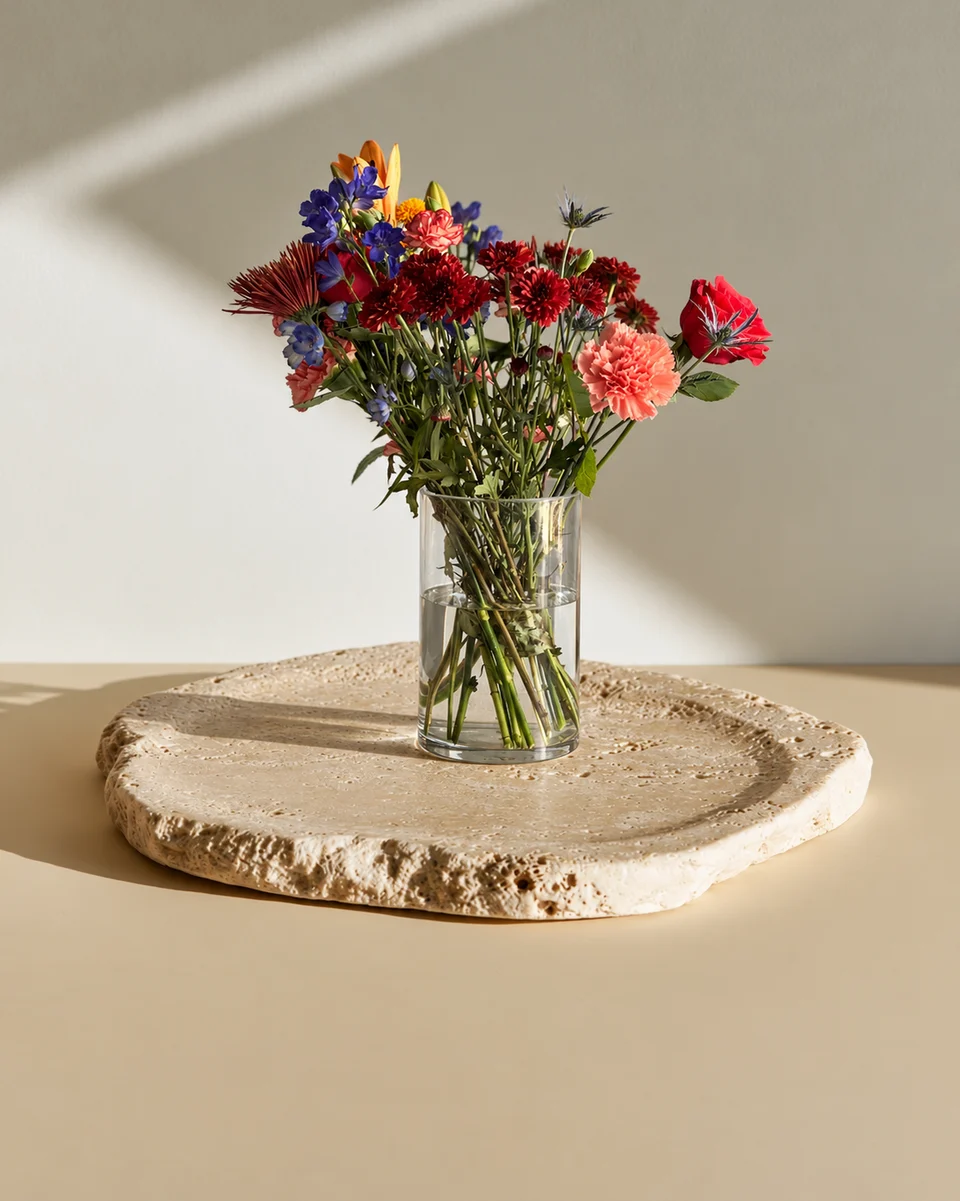
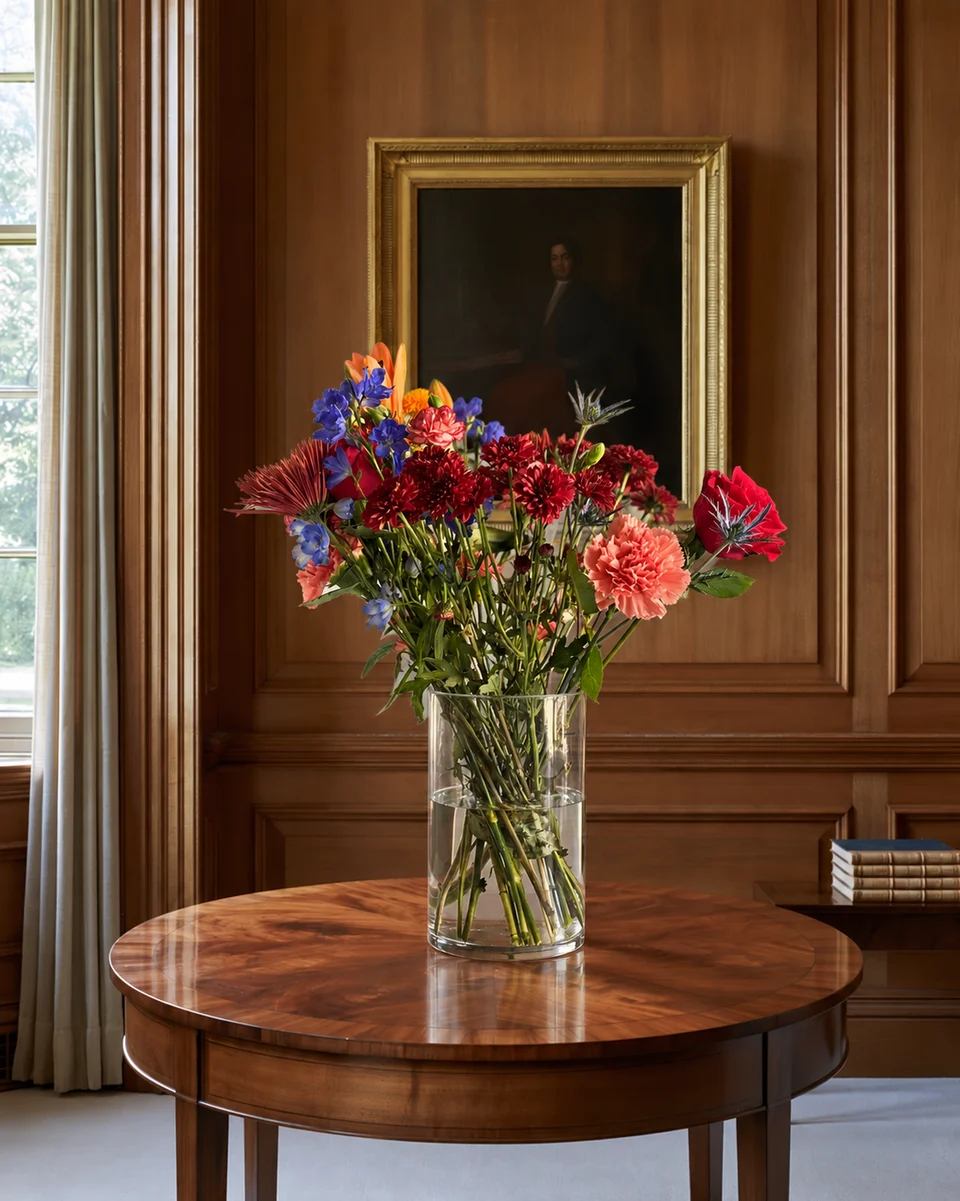
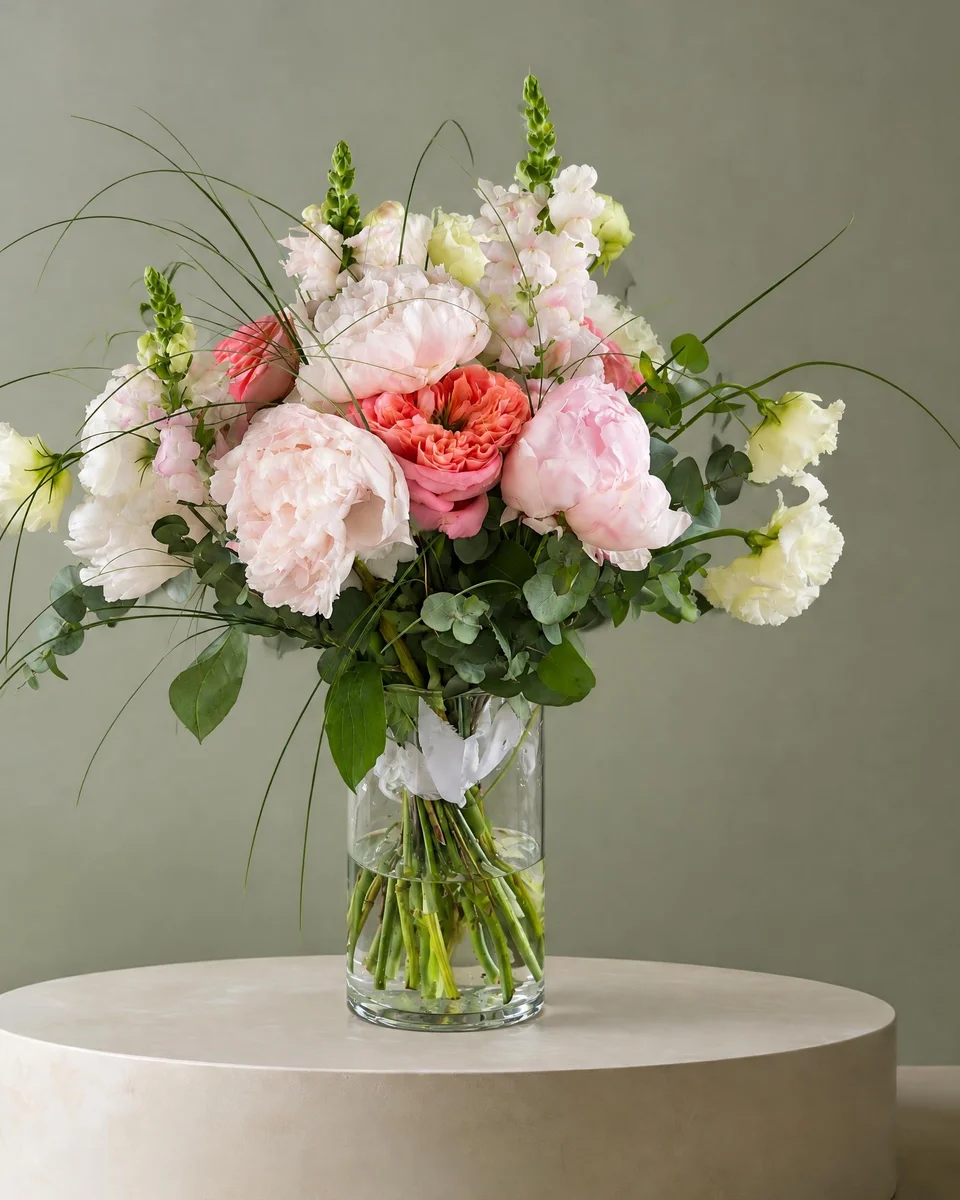
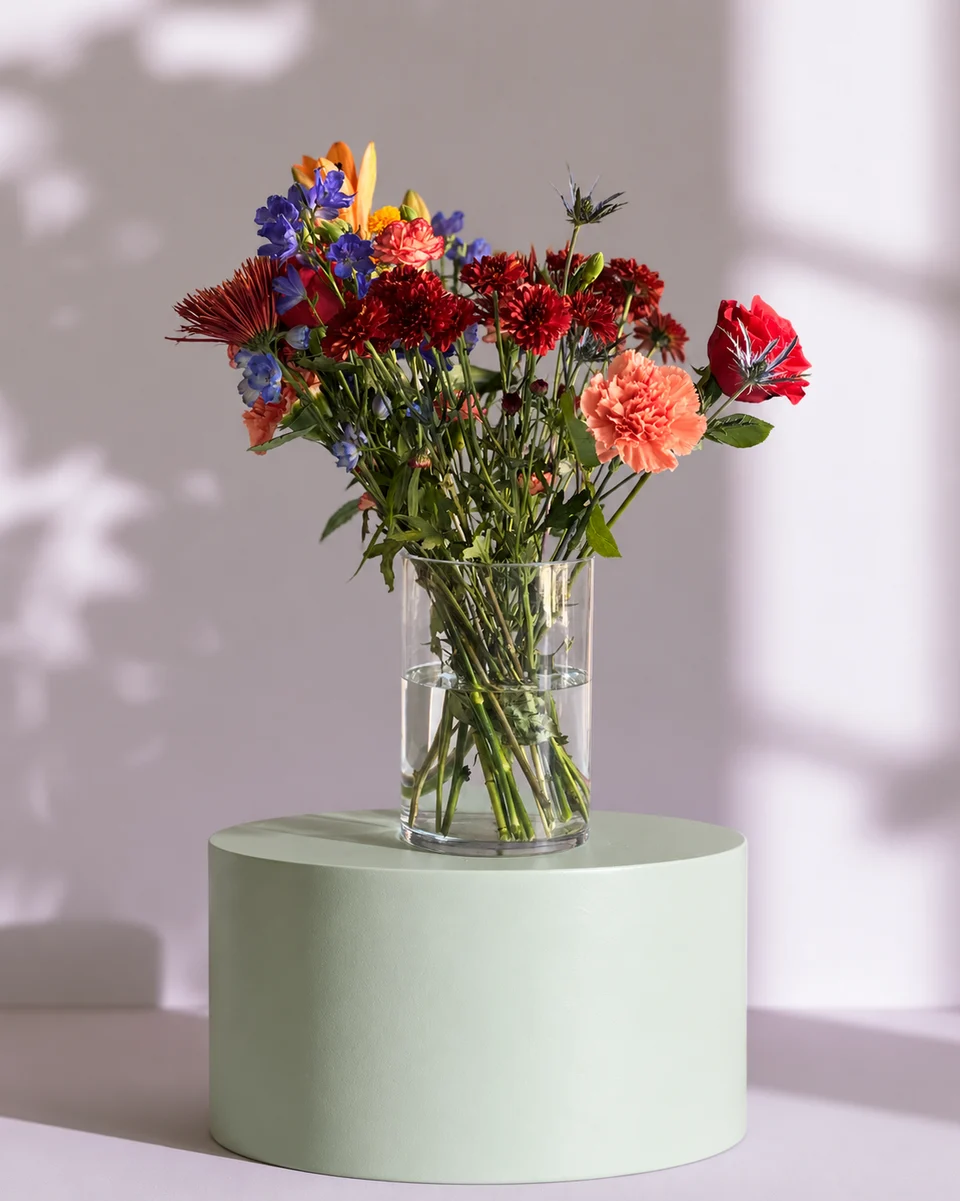
You don’t need a photographer, a studio or a designer to look like an established shop. FlowerShoot is a low-cost tool made for florists that does three jobs every new flower business needs:
- Studio product photos: one phone photo of your arrangement becomes a studio photo in about a minute, in 200+ rooms made for flowers, with your real flowers and vase. Use one room for your whole menu and your shop looks consistent everywhere.
- Photos for your website and listings: sizes for your website, Etsy, Google and social media, cropped around your flowers so a stem is never cut off.
- Ready-made templates: product cards with your name and price, florist menus, and a Campaign kit with an Instagram post, Stories, a Pinterest pin and a banner for each occasion, plus captions and Etsy listing words, all with your logo.
 Product card
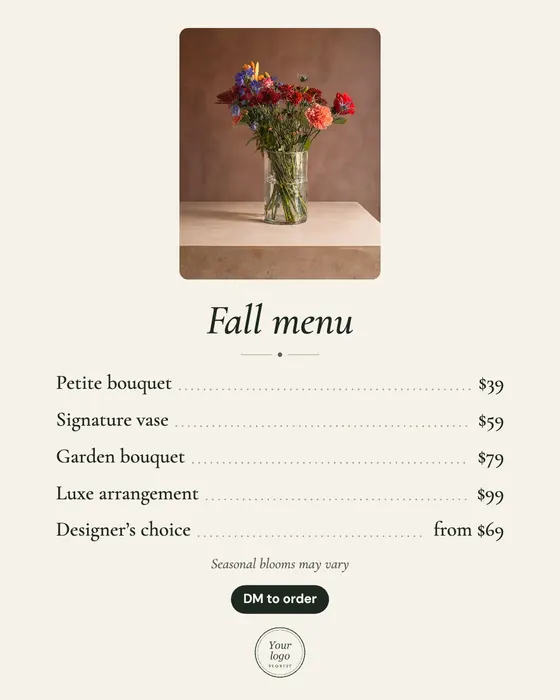 Menu
 Order-by post
Your first customers
- Friends, family and neighbours, with a launch post and your menu.
- A Google Business Profile with a service area, so you appear in local search without showing your address: read Google Business Profile for florists.
- Local cafés, salons and offices that would take a weekly arrangement.
- Etsy for dried and preserved flowers: read selling flowers on Etsy.
The full checklist, with the starter kit and a 30-day plan, is in how to start a flower business from home. Selling across the border too? Read how to start a florist business in the USA.
Made only for florists
From a bench photo to your next listing
Your flowers are the product. FlowerShoot makes the photo as lovely as the arrangement, wherever you share it: one phone photo in, a studio photo out.
For social media
Fresh posts and Stories every week, without a photo shoot or moving a single bucket. Download post and Story sizes with your logo and a caption, and let your flowers shine in a calm, professional feed.
For selling on your website
Choose a house style for your collection, then check each result against the piece you sell. Keep a real product photo alongside staged views, with clear size and vessel details.
- Skip the photographer. A studio photo from one phone photo, in about a minute.
- Standard photos from 19.5¢. One standard photo uses 1 credit. Monthly plans start at $10 for 50 credits. Optional 4K generation uses 2 credits.
- Try before you subscribe. Start with 3 free previews, no card. Monthly plans start at $10 for 50 credits.
- Your real flowers. Start from your own arrangement. Compare the result with the original before listing it.
- 200+ rooms made for flowers. Studios, pedestals, homes, weddings and every season.
Quick answers
Do I need a licence to sell flowers in Canada?
There’s no florist licence in Canada, but you may need a city business licence, a provincial business name registration if you don’t trade under your own name, and sales tax registration once you pass the thresholds.
Do I need to incorporate to start a flower business in Canada?
No. Most florists start as sole proprietors and report their profit on their personal tax return. You can incorporate later if an accountant advises it.
When do I need to charge GST/HST on flowers?
Once your taxable sales pass $30,000 over four consecutive calendar quarters, or in a single quarter. Below that, registering is optional.
Do I charge PST on flowers?
In British Columbia, Saskatchewan and Manitoba, provincial sales tax generally applies to flowers, and Quebec has QST. In BC, a home-based seller with no storefront and $10,000 or less in yearly retail sales can be a small seller who doesn’t collect PST.
What taxes does a self-employed florist pay in Canada?
Income tax on profit, both shares of CPP (QPP and QPIP in Quebec) on self-employment earnings, and GST/HST and provincial sales tax on sales once registered. Instalments apply when your net tax owing is over $3,000 ($1,800 in Quebec) this year and in either of the two previous years.
How can a new Canadian florist get professional product photos?
Take one phone photo of each design in soft window light and turn it into a studio photo with FlowerShoot, in about a minute. Prices are shown in Canadian dollars, and you can try 3 free previews without a card.
Sources
- Canada Revenue Agency: when to register for GST/HST
- Canada Revenue Agency: who has to pay tax instalments
- Canada Revenue Agency: self-employed business income (T4002)
- Province of British Columbia: PST small sellers
- Manitoba Finance: RST small business notice (April 2024)
- Revenu Québec: small suppliers
Platform rules change. Check each one’s current help pages before you upload.
Prices on this page are in US dollars.