Starting out in the UK
How to start a flower business from home in the UK
Short answer
To start a flower business from home in the UK, most people set up as a sole trader and register with HMRC for Self Assessment once their sales, before costs, pass £1,000 in a tax year. Tell your mortgage lender or landlord and your insurer, and ask your council about licences if you will trade at markets. Buy from a wholesale market, a weekly flower lorry, an online wholesaler or British growers, price from your costs, and launch with a few signature designs photographed well.
In this guide Jump to what you need
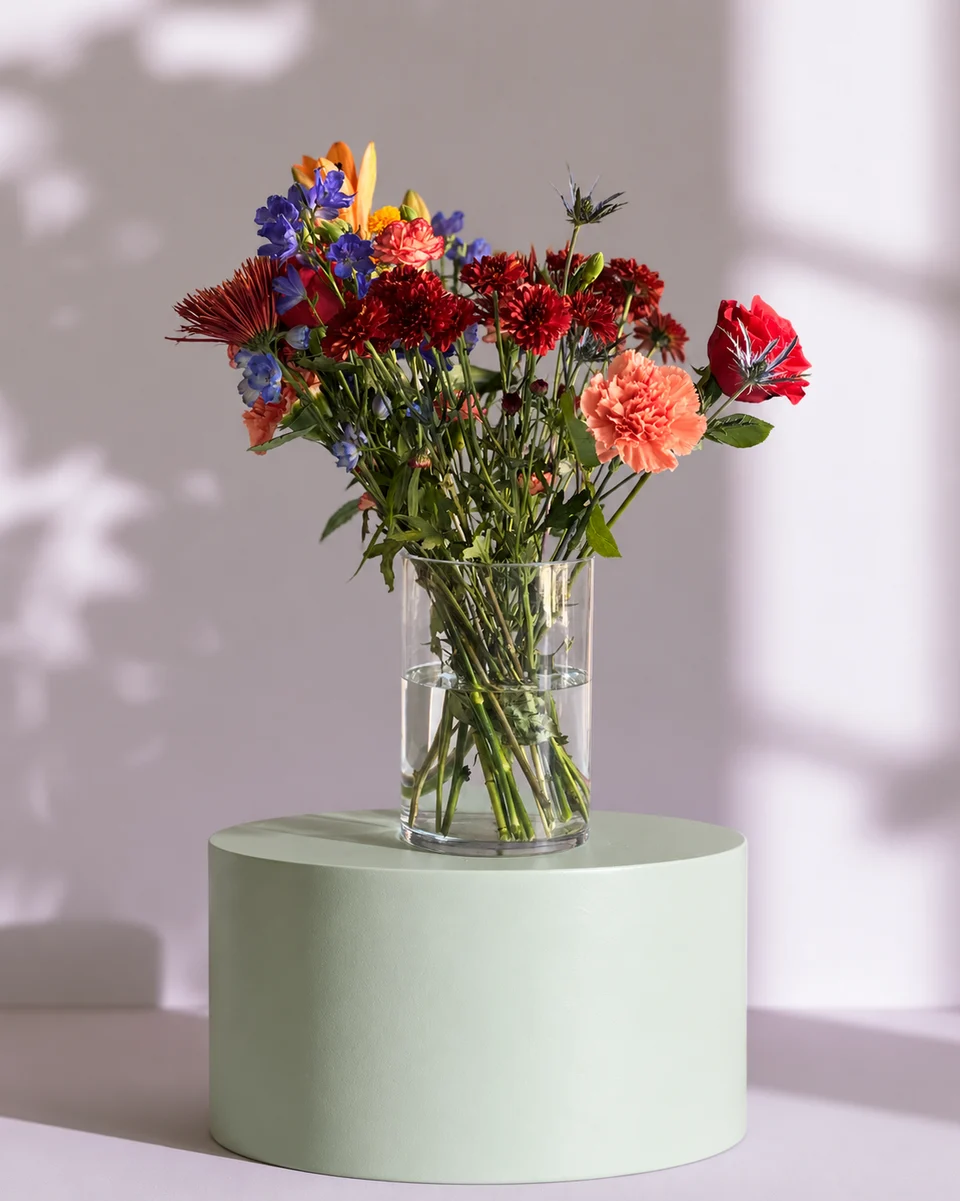
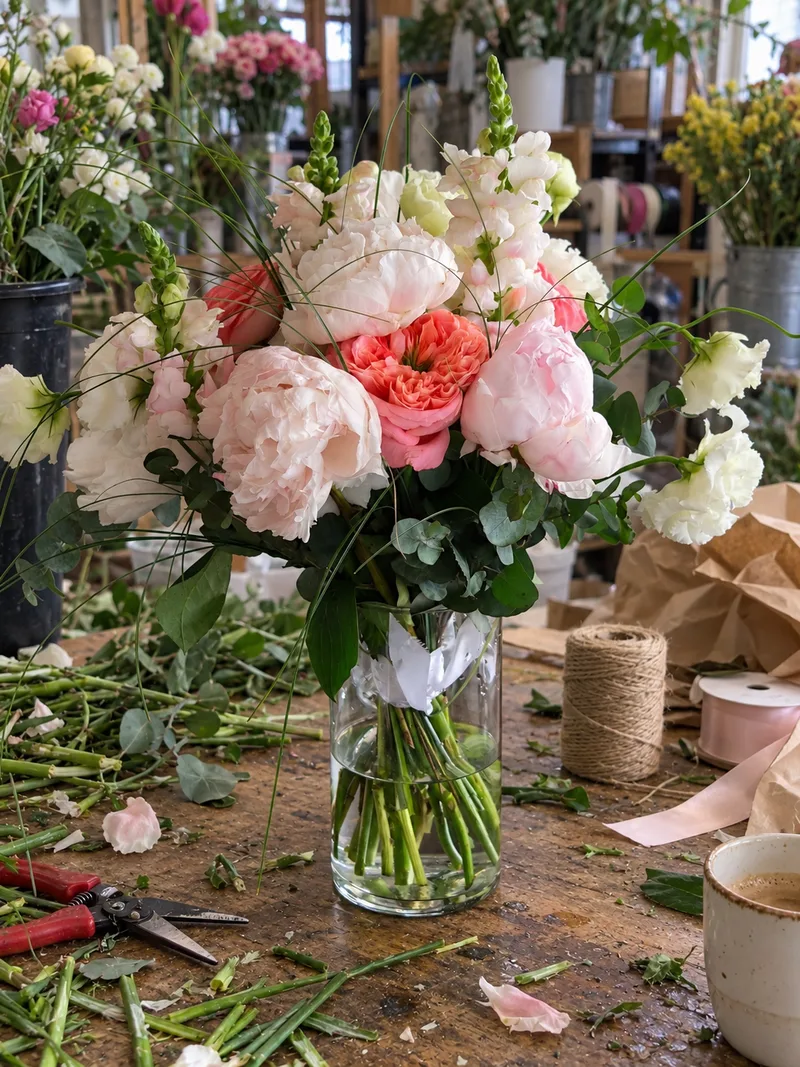
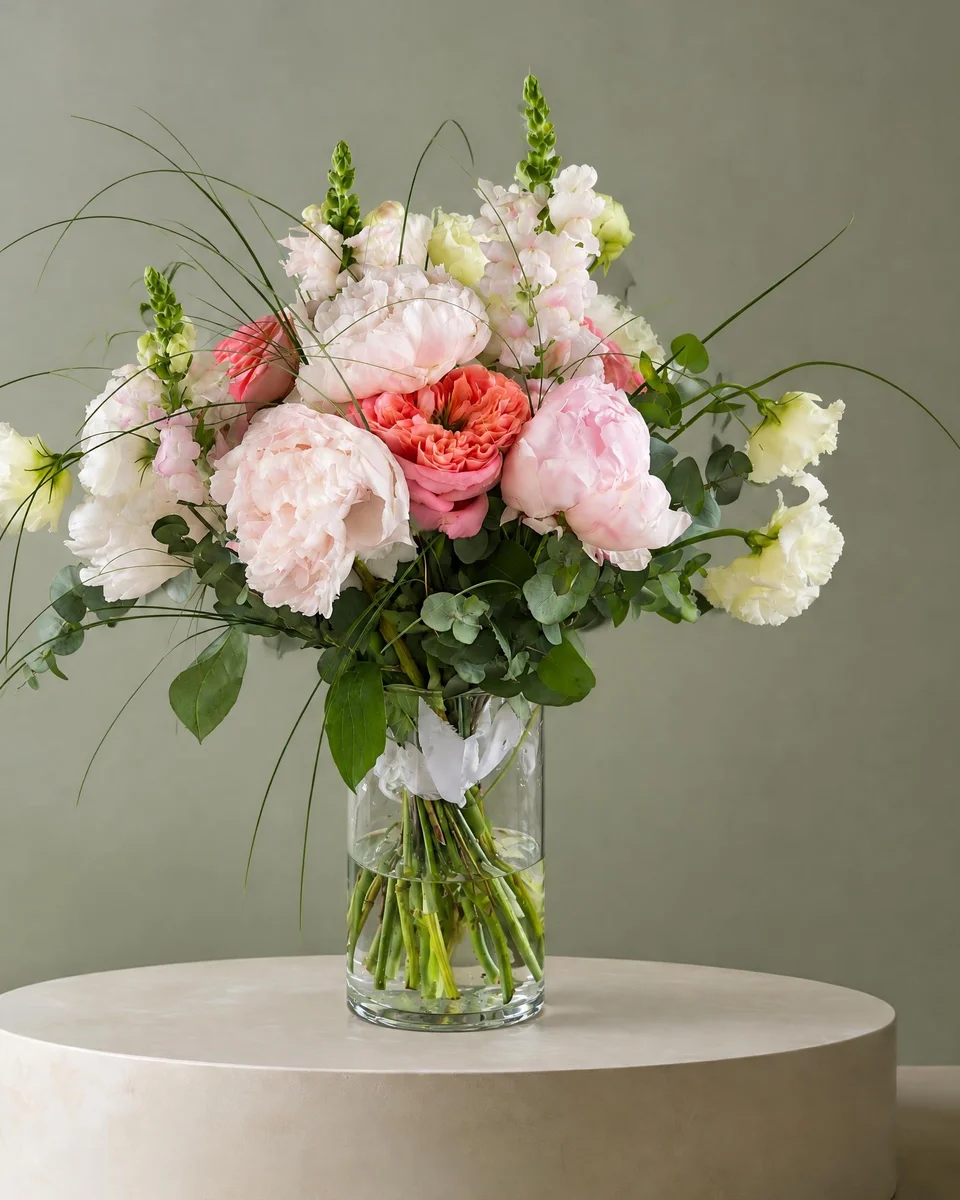
Lots of UK florists start at home: a spare room, a cool garage or a garden studio. Here is what to sort out, in plain English, from HMRC to the flower lorry, and how to make a first menu that sells before Mothering Sunday comes round. For the photos, FlowerShoot turns a phone photo of your arrangement into a studio product photo, with prices in pounds.
 Phone photo
 Studio photo
At a glance: what you need in the UK
| Step | What to do | When |
|---|---|---|
| Business structure | Start as a sole trader, with no company needed. You can form a limited company later. | Day one |
| HMRC | Register for Self Assessment once your sales, before costs, pass £1,000 in a tax year. Pay income tax and Class 4 National Insurance on your profit. | Register by 5 October after the end of the tax year you start; file and pay by 31 January |
| VAT | Register once taxable turnover passes £90,000 in any 12 months. | Only when you reach it |
| Your home | Tell your mortgage lender or landlord, and check business rates with the Valuation Office Agency. | Before you start |
| Insurance | Business cover for stock and liability; employers’ liability by law once you employ staff. | Before your first order |
| Market stalls | A street trading licence or council consent, plus the market’s own rules. | Before you trade outdoors |
| Licence or qualification | Not required to be a florist. Floristry qualifications are optional. | Whenever you like |
Tax and registration
Most start as a sole trader
It’s the simplest set-up: you and the business are one. Some florists later form a limited company; an accountant can tell you when that makes sense.
The £1,000 trading allowance
If your gross income from the business is £1,000 or less in a tax year (6 April to 5 April), you don’t need to tell HMRC. Once it’s more, register for Self Assessment and file a tax return. You can use the £1,000 allowance or deduct your real costs, not both.
Tax and National Insurance
You pay income tax and Class 4 National Insurance on your profit. The return and payment are due by 31 January after the tax year, and once your bill is big enough HMRC asks for payments on account in advance.
Making Tax Digital
From April 2026, sole traders with income over £50,000 keep digital records and send quarterly updates to HMRC, and from April 2027 the limit drops to £30,000. Check gov.uk if you’re near it.
Keep records from day one
Every receipt for flowers, sundries and tools, every sale and your delivery mileage. A spreadsheet or a simple bookkeeping app is enough at the start.
VAT comes later
You must register for VAT once your taxable turnover goes over £90,000 in any 12 months. A new home business is usually well below that.
Running it from home
- Your mortgage lender or landlord: some agreements need permission before you run a business from home.
- Business rates: they may apply to a part of your home used for the business, depending on whether the Valuation Office Agency gives that part a rateable value (the figure business rates are worked out from). Small business rate relief can bring the bill down, often to nothing.
- Planning: usually only a question for major alterations, a garden studio, or lots of customers and deliveries. Ask your council if you’re unsure.
- Insurance: home insurance may not cover business stock, equipment or customers visiting. Public liability cover is worth having for markets, venues and events, and employers’ liability insurance is a legal requirement once you employ staff.
- Your car: tell your insurer if you deliver. Business use usually needs adding to the policy.
- Market stalls: street trading needs a licence or consent from the council, and markets have their own pitch rules.
Do you need floristry qualifications?
No. Anyone can sell flowers in the UK. Courses still help with skills, speed and confidence, especially for weddings: colleges offer Level 2 and Level 3 floristry qualifications, and many florists run short workshops in hand-tied bouquets, wedding work and Christmas wreaths.
Where UK florists buy flowers
Wholesale flower markets
New Covent Garden Flower Market in London is the best known, and other cities have wholesale markets and cash-and-carry florist suppliers.
Flower lorries
Flower lorries, many stocked from the Dutch auctions, drive a weekly route and sell straight from the van to florists. Ask local florists which ones call in your area.
Online wholesalers
Boxes delivered to your door, usually with a minimum order. Plan time to condition everything on delivery day.
British growers
Seasonal, scented stems that travel less. Flowers from the Farm lists cut-flower growers across the UK.
The UK flower year
| When | Occasion | Plan ahead |
|---|---|---|
| 14 February | Valentine’s Day | Order roses early; prices rise in the weeks before |
| March or early April | Mothering Sunday | Three weeks before Easter Sunday, not the US date in May. Open pre-orders weeks ahead |
| May to September | Wedding season | Consultations and deposits months ahead |
| Autumn | Autumn and dried flowers | Warm colours and longer-lasting dried designs |
| Late November to Christmas Eve | Christmas | Door wreaths, wreath workshops and table centres |
Pricing in pounds
New florists most often under-price. A common starting point: flowers and foliage times about 3, the vase or wrap times about 2, then labour (often another 20–30% on top of that) and delivery. Include waste, card fees and your time at the market, then compare with local florists rather than supermarket bouquets. The free flower pricing calculator does the sums, and the florist menu maker turns them into a menu.
Your photos sell before your reviews do
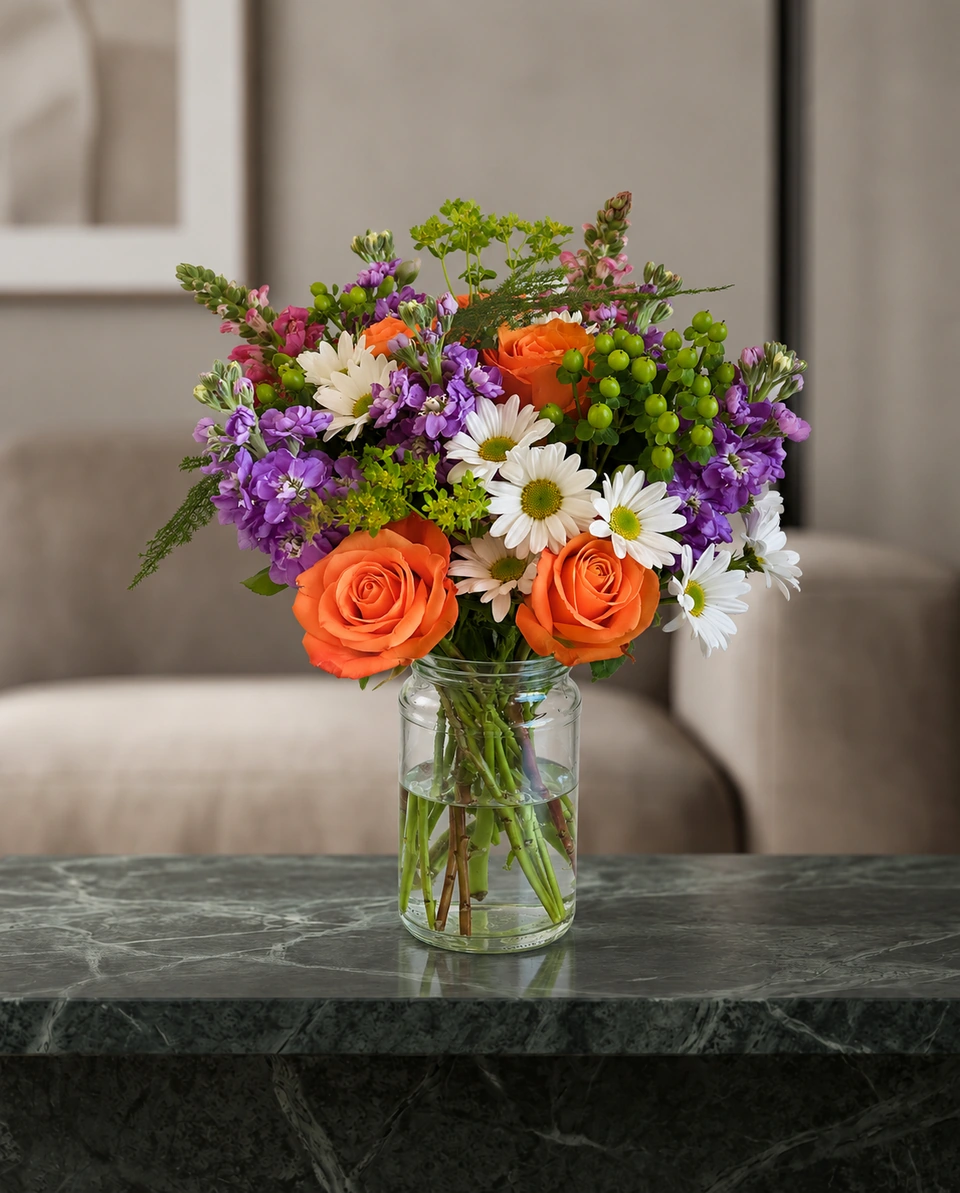
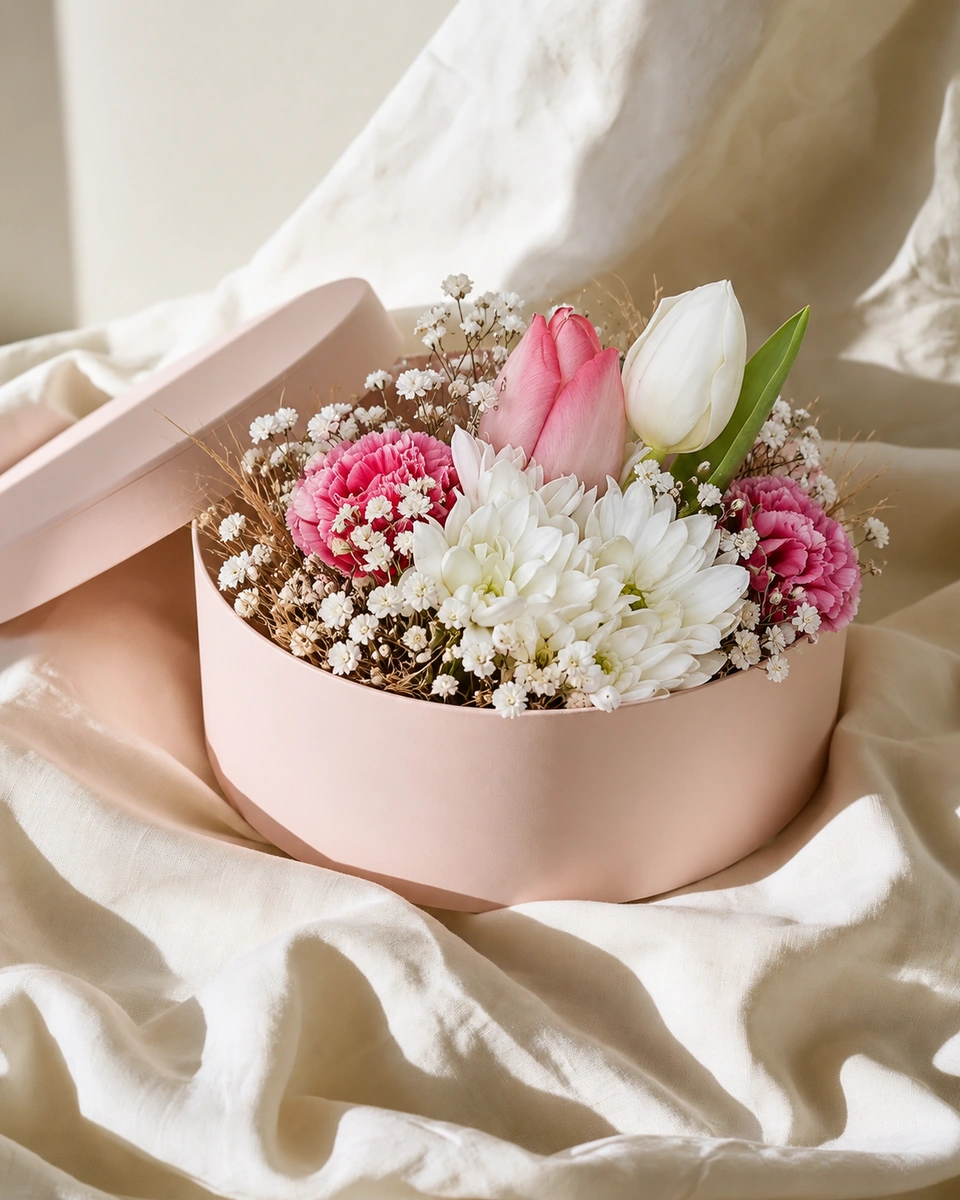
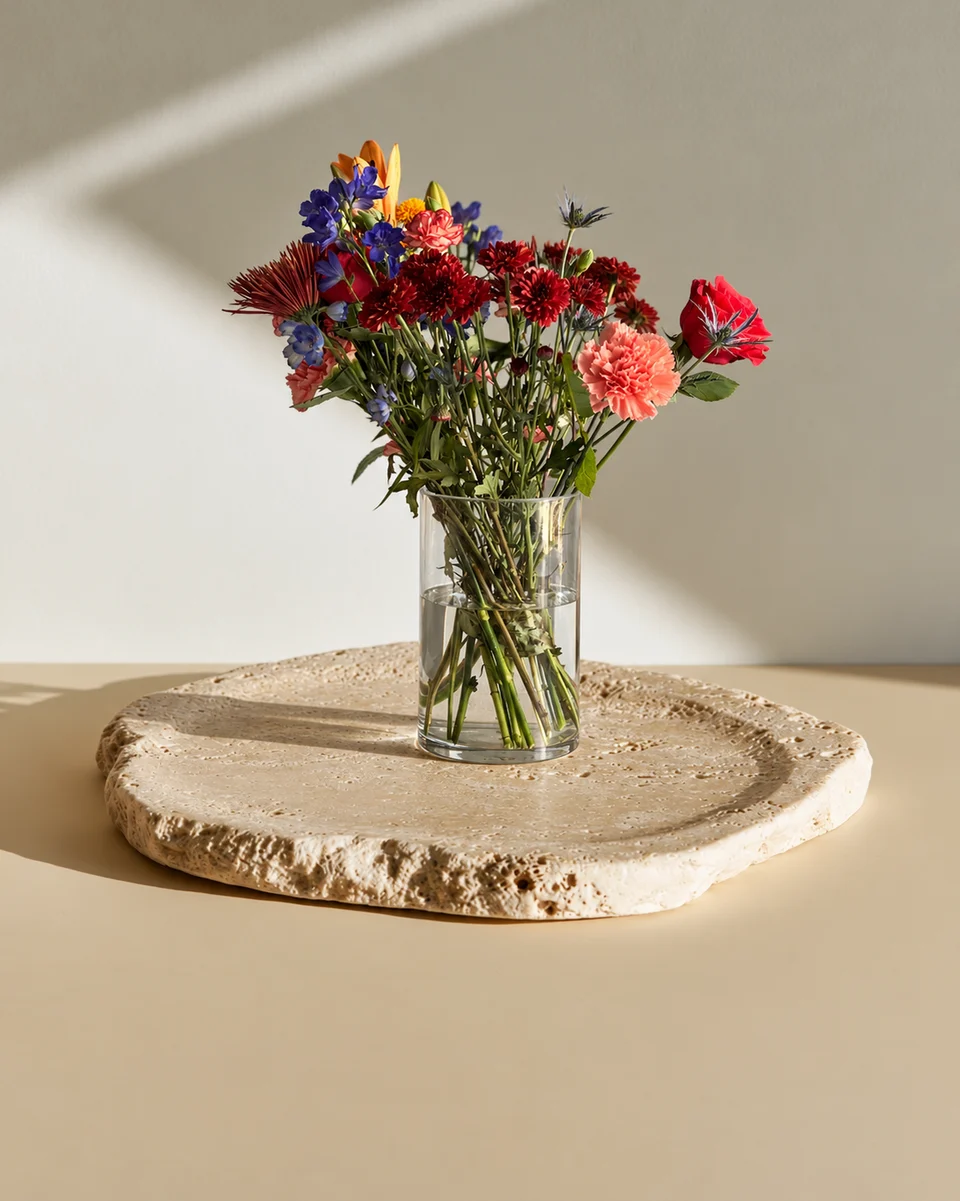
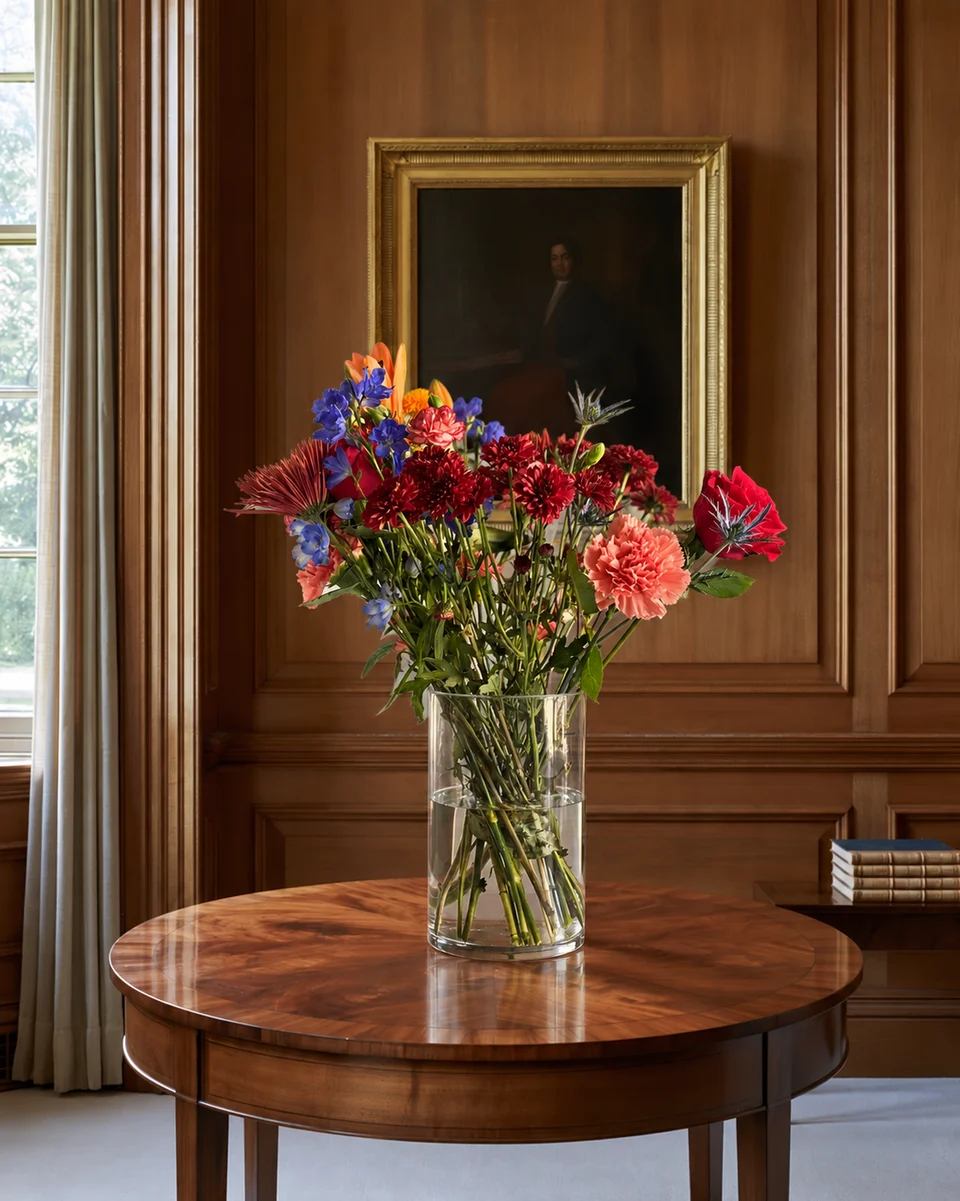
When nobody knows you yet, your photos do the selling. A lovely bouquet photographed on a kitchen worktop looks home-made in the wrong way, and customers decide on price from that one picture. Take one phone photo of each design in soft window light, then FlowerShoot places it in a studio room made for flowers in about a minute, with your real flowers and vase. Your first menu can look as polished as a high-street shop’s.
Stand out on a small budget
You don’t need a photographer, a studio or a designer to look like an established shop. FlowerShoot is a low-cost tool made for florists that does three jobs every new flower business needs:
- Studio product photos: one phone photo of your arrangement becomes a studio photo in about a minute, in 200+ rooms made for flowers, with your real flowers and vase. Use one room for your whole menu and your shop looks consistent everywhere.
- Photos for your website and listings: sizes for your website, Etsy, Google and social media, cropped around your flowers so a stem is never cut off.
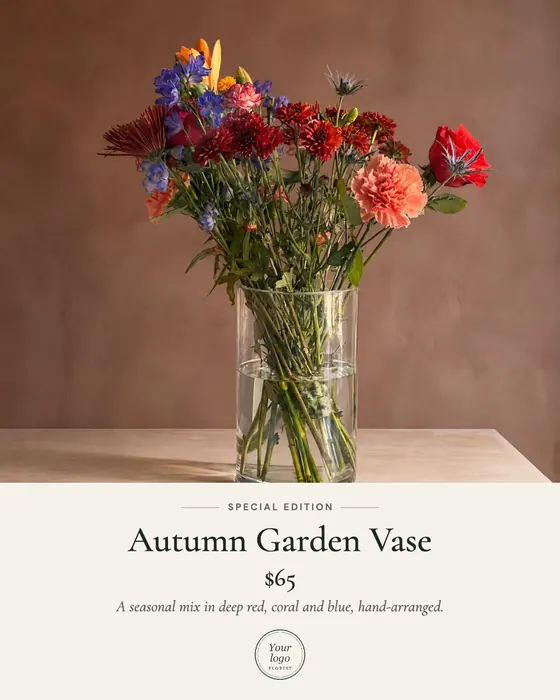
- Ready-made templates: product cards with your name and price, florist menus, and a Campaign kit with an Instagram post, Stories, a Pinterest pin and a banner for each occasion, plus captions and Etsy listing words, all with your logo.
 Product card
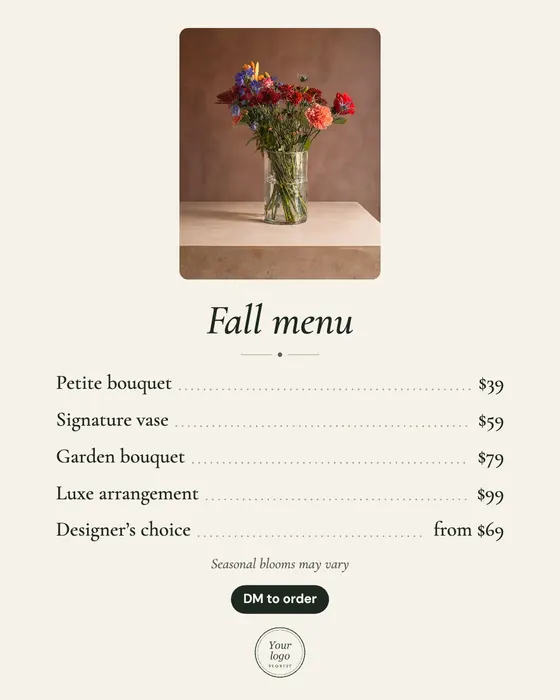 Menu
 Order-by post
Your first customers
- Friends, family, neighbours and local Facebook groups (check each group’s rules on selling).
- A Google Business Profile with a service area, so you appear in local search without showing your address: read Google Business Profile for florists.
- Local cafés, salons and offices that would take a weekly arrangement.
- Local funeral directors: funeral tributes are a big part of UK floristry.
- Etsy for dried and preserved flowers: read selling flowers on Etsy.
- Relay networks such as Interflora can send you orders for a membership fee and a share of each order; read the terms before you join.
The full checklist is in how to start a flower business from home.
Made only for florists
From a bench photo to your next listing
Your flowers are the product. FlowerShoot makes the photo as lovely as the arrangement, wherever you share it: one phone photo in, a studio photo out.
For social media
Fresh posts and Stories every week, without a photo shoot or moving a single bucket. Download post and Story sizes with your logo and a caption, and let your flowers shine in a calm, professional feed.
For selling on your website
Choose a house style for your collection, then check each result against the piece you sell. Keep a real product photo alongside staged views, with clear size and vessel details.
- Skip the photographer. A studio photo from one phone photo, in about a minute.
- Standard photos from 19.5¢. One standard photo uses 1 credit. Monthly plans start at $10 for 50 credits. Optional 4K generation uses 2 credits.
- Try before you subscribe. Start with 3 free previews, no card. Monthly plans start at $10 for 50 credits.
- Your real flowers. Start from your own arrangement. Compare the result with the original before listing it.
- 200+ rooms made for flowers. Studios, pedestals, homes, weddings and every season.
Quick answers
Do I need a licence to sell flowers from home in the UK?
There isn’t usually a special licence for selling flowers, but you must register with HMRC once your sales pass £1,000 in a tax year, and you need council consent for street trading or a market pitch. Ask your council what applies where you live.
How much can I earn from flowers before telling HMRC?
Up to £1,000 of gross trading income in a tax year is covered by the trading allowance. Above that, register for Self Assessment.
Do I pay business rates if I run a flower business from home?
Sometimes. It depends on whether the part of your home used for the business has a rateable value. Small business rate relief often reduces the bill. Contact the Valuation Office Agency to check.
Do I need insurance for a home flower business?
Yes, in practice. Home insurance may not cover business stock or visitors, public liability cover is worth having for markets and events, and employers’ liability insurance is required by law once you employ staff.
Where can I buy wholesale flowers in the UK?
At wholesale flower markets such as New Covent Garden, from flower lorries that visit florists weekly, from online wholesalers, and from British growers.
When is Mother’s Day for UK florists?
Mothering Sunday falls three weeks before Easter Sunday, in March or early April. It’s different from the US Mother’s Day in May.
Sources
- GOV.UK: running a business from home
- GOV.UK: set up as a sole trader
- GOV.UK: tax-free trading allowance
- GOV.UK: when to register for VAT
- GOV.UK: employers’ liability insurance
- GOV.UK: Making Tax Digital for Income Tax
Platform rules change. Check each one’s current help pages before you upload.