Buying and pricing
Buying wholesale flowers as a small florist: compare the usable cost
Short answer
Compare wholesale quotes using the same variety, grade, bunch quantity and delivery date. Include freight, packaging charges and likely unusable or unsold stems, then divide by the stems you expect to use. Confirm supplier eligibility, order minimums and claim rules directly. Use that cost in your recipes before publishing prices or menu photos.
In this guide Jump to what you need
A low price per stem is useful only when the flowers arrive in time, suit your designs and sell while they are usable. Before committing to a box, compare what reaches your bench with what your next orders actually need. Then use the free pricing calculator to cost the design.
Ask for a quote you can compare
| Detail | Why it changes the decision |
|---|---|
| Variety, grade and stem length | A different grade or length may not make the pictured design |
| Price unit and bunch count | A price per bunch is not a price per stem |
| Minimum purchase | An inexpensive box can exceed what your shop can sell |
| Freight and other order charges | The invoice total can differ from the catalogue price |
| Arrival and opening stage | The flowers must be usable when the order is made |
| Substitutions and claims | Agree what can change, the reporting deadline and evidence required |
Work out a cost per usable stem
For an illustrative order in US dollars, 200 stems cost $120 and delivery costs $20. The landed cost is $140. If you expect to use 160 stems, $140 ÷ 160 = $0.875, about 88¢ per usable stem. Dividing by all 200 gives 70¢, which overlooks the stems you expect not to use. Neither number is a recommended wholesale price or a retail selling price.
Use your own invoices and usable-stem record rather than assuming a standard loss rate. Do not count the same loss twice: if the input cost already includes that waste, do not add the same allowance again in the recipe. Rent, design work, hard goods, delivery labour and taxes still need separate treatment in your pricing.
Choose purchasing terms that fit a small order book
Ask local wholesalers, growers and shipped suppliers about minimum quantities, collection or delivery, availability and account requirements. Trade-only suppliers may require business documentation. For example, Mayesh currently requires verified floral/event professional status and a valid resale license; that is one supplier’s rule, not a universal permission or legal requirement for every seller. Confirm your local registration and tax obligations separately.
Start from orders and repeatable designs
List the varieties and quantities for the pieces you expect to sell. Separate confirmed orders from speculative stock.
Compare delivered totals
Use the same units, grade and arrival date. Ask what happens if an essential flower is substituted or delayed.
Inspect on arrival
Count and inspect promptly, document issues and follow that supplier’s claim process. Conditioning needs depend on the flower and its stage.
Record the outcome
Note stems bought, stems used and why the remainder was lost. That makes the next buying decision more reliable than a generic markup rule.
Make the sample you can keep selling
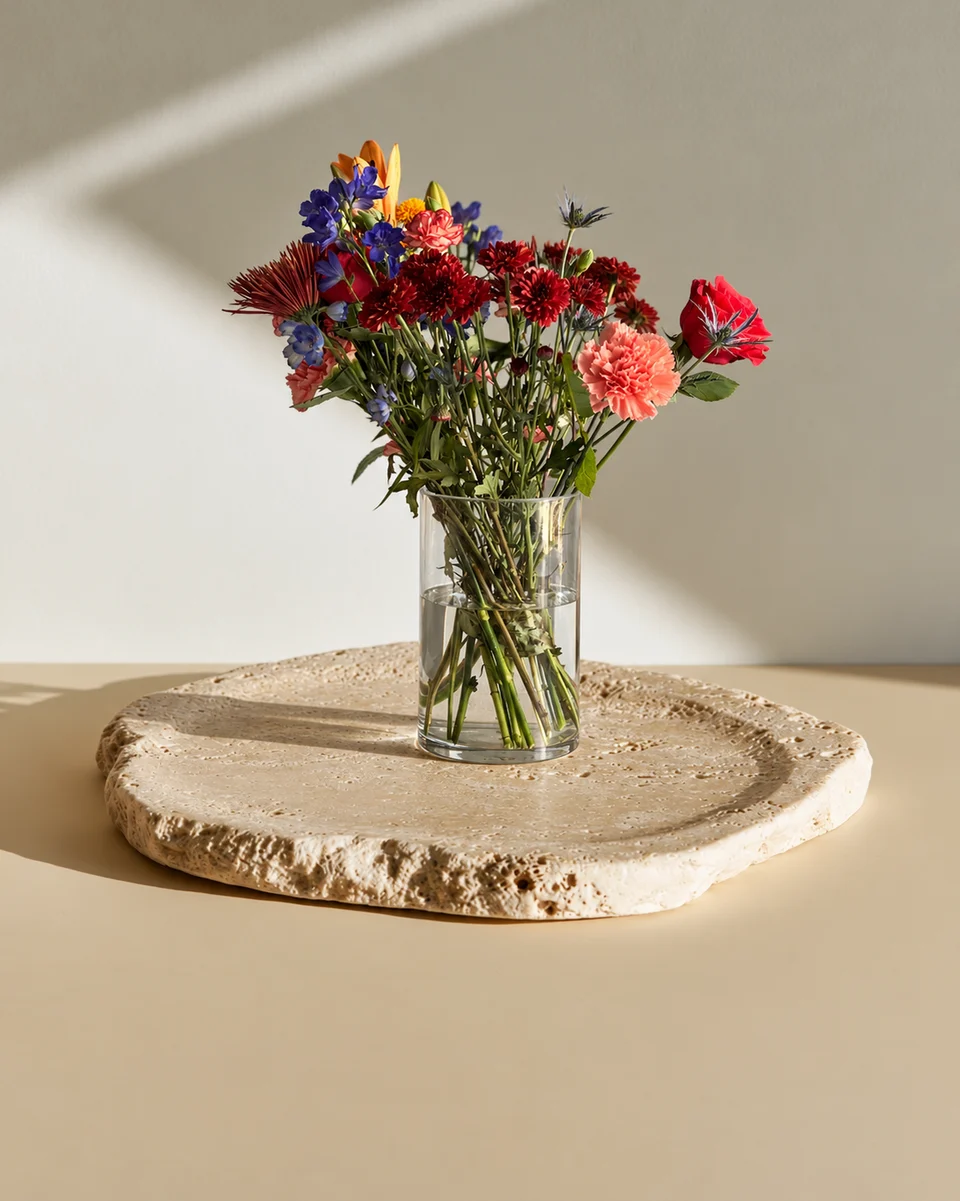
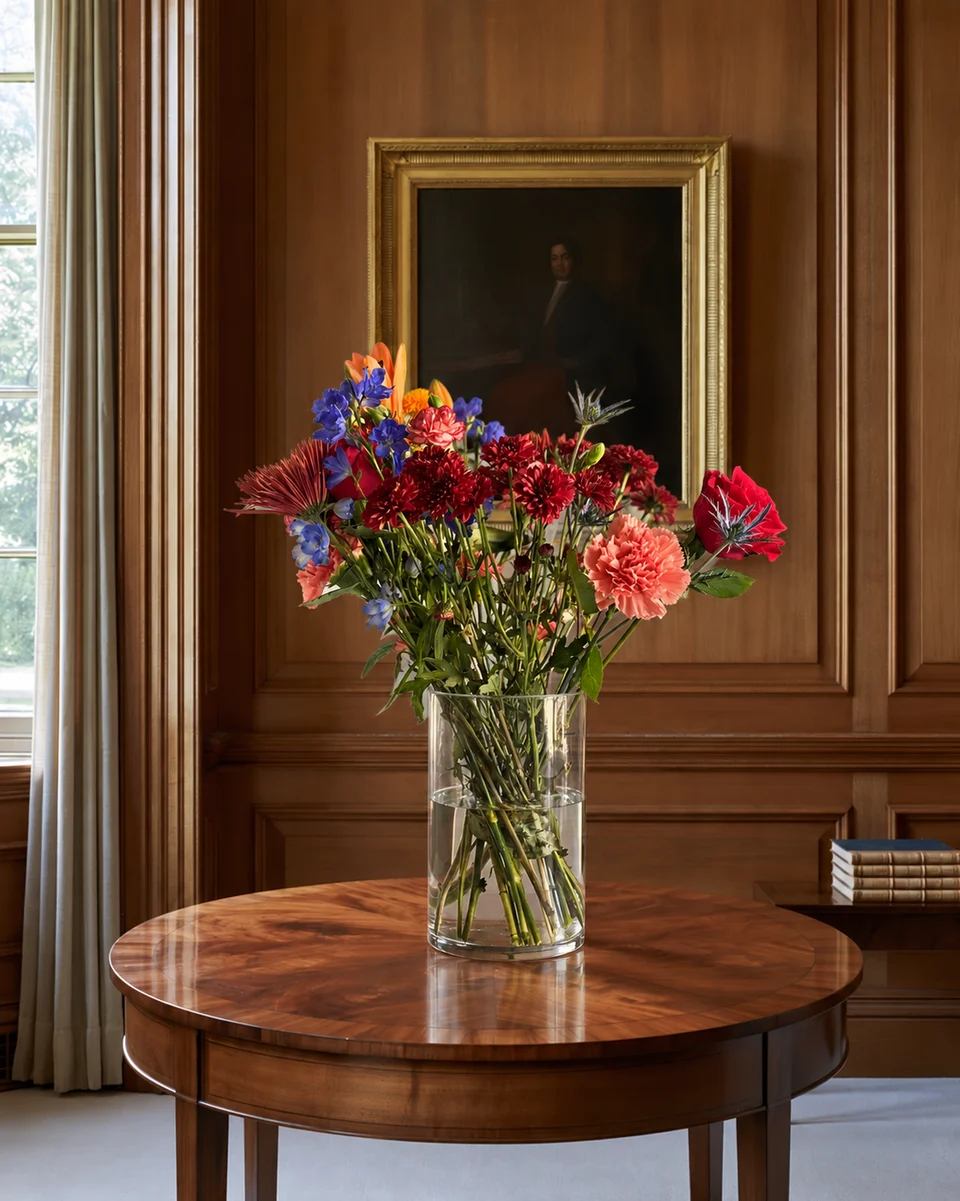
Once the actual supply and vessel are confirmed, make and photograph one representative sample. The picture below is an illustrative staging test, not evidence of a supplier order or of the costs in the arithmetic example.
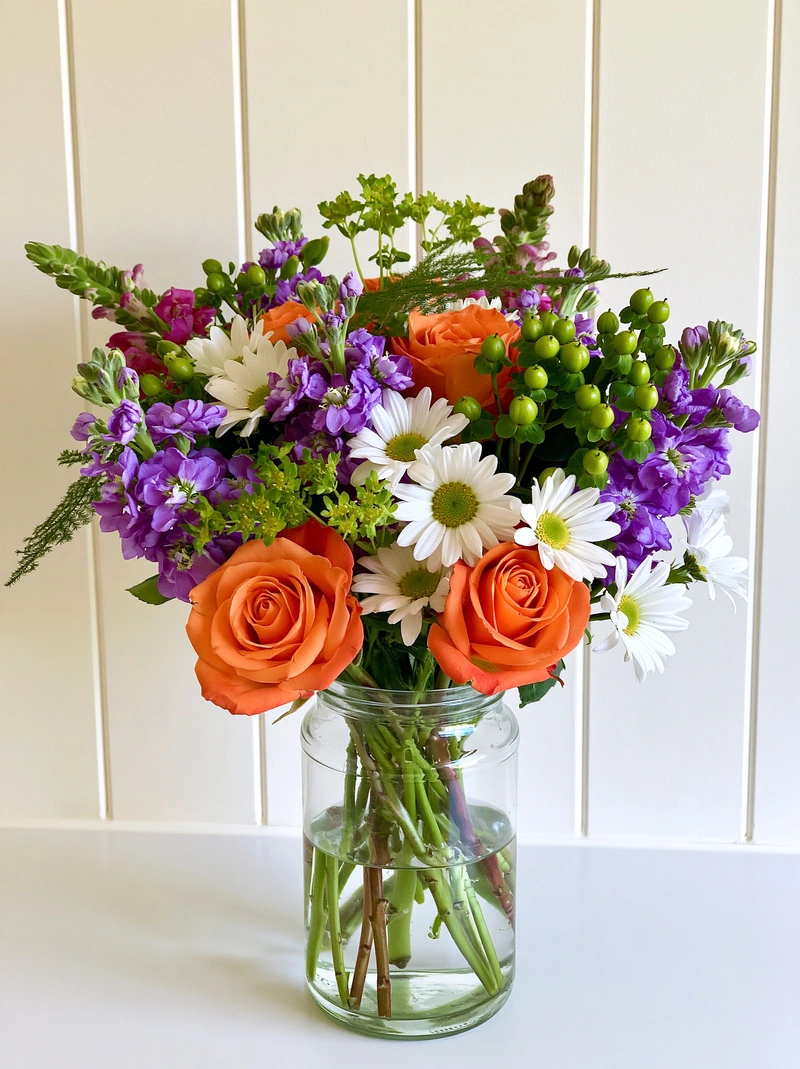 Phone photo
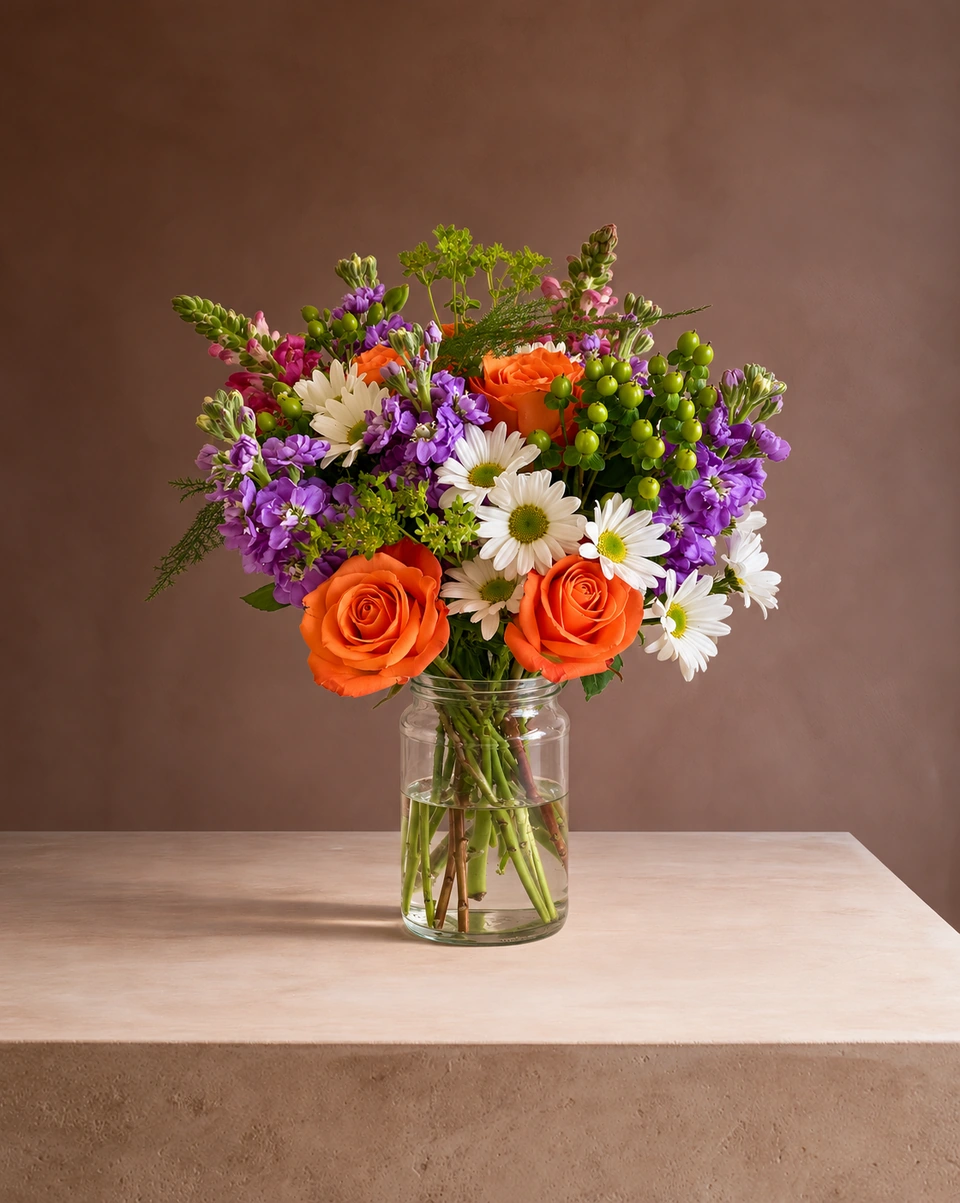 Studio photo
Use the free pricing calculator with your own flower costs, then the menu maker to prepare the offer. If several sizes are sold, follow the size photo and recipe checklist. FlowerShoot can stage your finished sample in a consistent setting; inspect the result beside the original before publishing it.
Made only for florists
From a bench photo to your next listing
Your flowers are the product. FlowerShoot makes the photo as lovely as the arrangement, wherever you share it: one phone photo in, a studio photo out.
For social media
Fresh posts and Stories every week, without a photo shoot or moving a single bucket. Download post and Story sizes with your logo and a caption, and let your flowers shine in a calm, professional feed.
For selling on your website
Choose a house style for your collection, then check each result against the piece you sell. Keep a real product photo alongside staged views, with clear size and vessel details.
- Skip the photographer. A studio photo from one phone photo, in about a minute.
- Standard photos from 19.5¢. One standard photo uses 1 credit. Monthly plans start at $10 for 50 credits. Optional 4K generation uses 2 credits.
- Try before you subscribe. Start with 3 free previews, no card. Monthly plans start at $10 for 50 credits.
- Your real flowers. Start from your own arrangement. Compare the result with the original before listing it.
- 200+ rooms made for flowers. Studios, pedestals, homes, weddings and every season.
Quick answers
Can a home-based florist buy wholesale flowers?
It depends on the supplier’s approved customer categories and documentation requirements, not just whether you have a shopfront. Ask the supplier directly and check local business and tax rules.
How do I compare a box price with a local wholesaler?
Convert both to the same flower grade and units, add the order and delivery charges, and divide by the stems you realistically expect to use. Consider arrival timing and substitution risk too.
Should I apply a standard waste percentage to every flower?
Use your own records where possible. Loss varies with the flower, handling and demand. A planning assumption can help initially, but it is not a measured result for your shop.
Does a lower wholesale cost mean a higher profit?
Not automatically. Unsold stems, delivery, labour, hard goods and overhead can outweigh a lower quoted unit price. Compare the full cost of fulfilling the design at the price customers will pay.
Sources
Platform rules change. Check each one’s current help pages before you upload.
Prices on this page are in US dollars.